Thursday, March 27, 2014

CV / Resumé

So you're looking for a job...great! Perhaps the first question that comes to mind is: where do I start? Well, although it might not be very delightful to hear, looking for a job nowadays can be a job in itself. A useful place to start is creating a thorough yet concise CV or resumé.

The following post on creating a good CV is based on information found on WikiHow

WikiHow: to do anything

A resumé or CV is a one-page summary of your experiences, skills, and acheivements which demonstrate the qualifiactions you have to contribute to a specific job or position.

There are three ways that you can organize your CV: chronological, functional, or a combition of the two styles.
  • Chronological resumes are used for showing a steady growth in a particular career field. These are best used for someone applying to a job within their career-path to show an increase of responsibility over time.
  • Functional resumes are focused on skills and experience rather than job history. This type of resumé could be useful for someone who may have holes in their work history or who have gained experience from being self-employed for a time.
  • Combination resumes are a mixture of both a chronological and a functional resume. These are used to depict specific skills and how they were acquired. This type of resumé could be a good option if you have developed a specific skill set from working in a variety of related fields.  

General content

  • Choose fonts like Times New Roman, Arial, or Calibri 
  • Use font size 11 or 12 for content and 14 or 16 font size for the title or heading
  • Instead of changing between fonts to distinguish headings, try making specific sections bold or italicized 
  • Your margins should be 1 inch all the way around with 1.5 or 2 point line spacing
  • The body content shouold be aligned to the left whereas your header/title should be centered

 Tips

  • Think about descriptive job titles, for example, “Manager,” doesn't describe who or what a person manages, adding adjectives like “Sales Staff Manager” or “Executive Manager” may be more descriptive and desirable job titles on a resumé.
  • Many employers use special software programs to scan for particular keywords in or to filter through CVs. Therefore, you want to be sure that your resumé contains specific words related to the position for which you are applying. For example, look at the words employers use in the job description.  
  • When describing your previous positions, choose verbs that explain your responsibilities. For example, if you were a receptionist, you may want to include ‘scheduled appointments’ ‘assisted clients’ and ‘provided administrative support’ as part of your professional experience.
  • Proofread your work and have a friend read your resumé as well. Look for spelling mistakes, grammatical errors, typos, and incorrect contact information

WikiHow video on  How to write a resumé

Types of Resumés

For more information:


Bringing Unemployment to the top of the Charts

Or Billboards at least (France)


A French man who was unemployed tried a new way to get a job.
He put his CV (résumé) on a giant billboard.
The billboard was next to a very busy road.
It was four metres long and three metres high.
There was a photo of the man wearing a Santa Claus hat.
There was a message on the billboard that said:
"Trilingual operations manager seeks position in hotels, restaurants, tourism and leisure."
About 70,000 people a day could see the CV from their car.
Jobseeker Laurent Le Bret, 41, said: "All I want for Christmas is a job." His idea worked. A holiday resort contacted and interviewed him.
He started his new position as an operations manager ten days after
he put his résumé on the billboard.


Mr Le Bret had help from the owner of the billboard. He was going to pay to put his CV on the billboard. However, the advertising company decided to give him the space for free. Mr Le Bret saved 2,000 euros (about $2,700) because he did not have to pay. The advertising company is called Pisoni Publicité. The company's CEO spoke to the France 24 news agency. He said: "We thought it was an interesting idea. When people come up with ideas like this we are always keen to see what we can do. We're very happy to prove that what we do works, and that Mr Le Bret is back at work." Many people contacted Mr Le Bret after he got his job. They want to try the same thing. There are 3.3 million unemployed people in France.


This article has been taken from Breaking News English. For more information, click on the link below

Breaking News English 

Procrastination and Stress

How do you procrastinate? 

Make a list of your five most common ways of procrastinating.  


Now we are going to see John Kelly's short film "Procrastination" (0:15 - 3:38) which illustrates different ways people avoid doing things... Are their activities Kelly repeats? emphasizes? Why?

Do some of the activities he describes match some of the things on your list?


How can you stop procrastinating? 

Below is an article from a website called  The Happiness Project (The Happiness Project)

Ways to stop Procrastination

The list is divided into two parts. Student A has the first part, and Student B has the second part. Each student reads his or her part and then explains the steps to avoid procrastinating to his or her partner. 

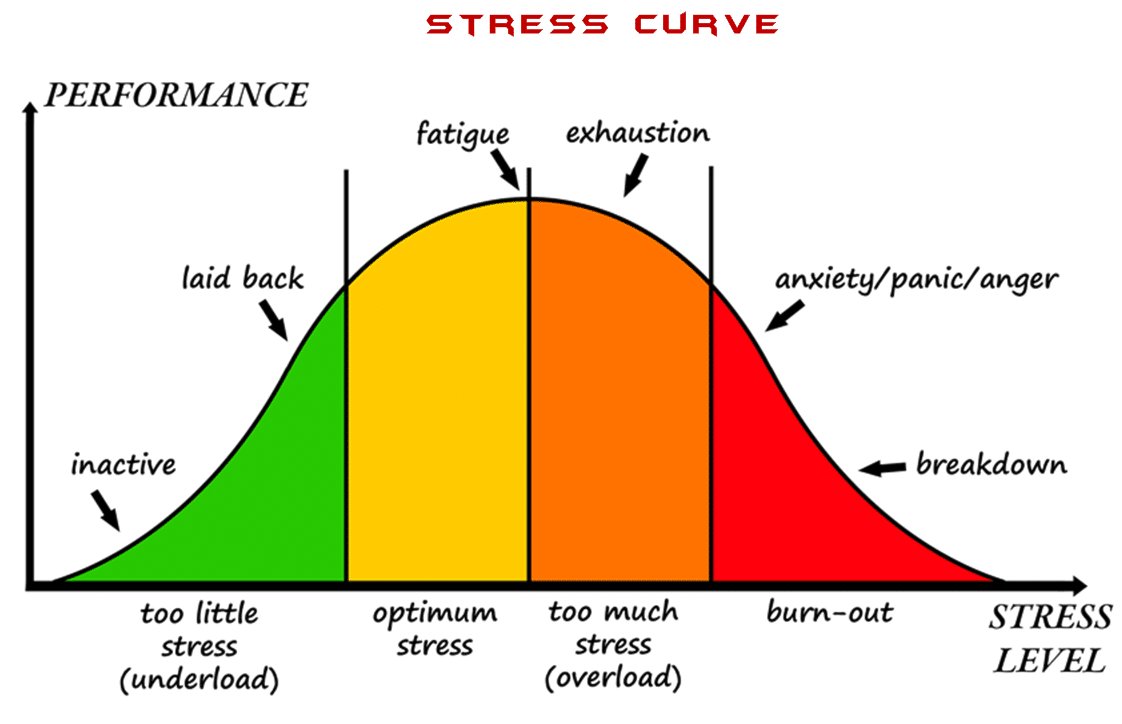
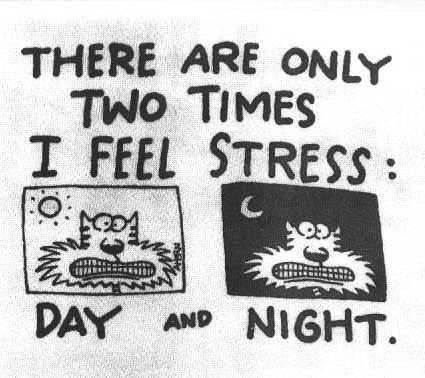
Stress 

What do you associate with the word 'stress?' Is there such a thing a 'good stress?' What's the difference between positive and negative stress, what are some examples?


An explanation of stress by the BBC, remember to breathe!!!


Health psychologist, Kelly McGonigal explñains how to think differently about stress with Ted Talks (5:25 - 7:30)


Wednesday, March 26, 2014

The 'Nothing' Box

  Mark Gungor is a pastor at Celebration Church in Green Bay, WI.  He hosts "Laugh Your Way to a Better Marriage® seminars"  civic events, business meetings and even for the US Army. 

Gungor talks about the different between men's and women's brains. The key difference being the "Nothing Box"


Do you aggree with Gungor's assessments of the male and female brain?
Do you have a 'Nothing Box?' If so, when do you tend to visit your ´nothing box?'

Do you think the 'nothing box' could be a form of procrastination? Or a way of coping with stress?


What's procrastination?
  • Procrastination is avoiding doing something 


What's stress?
  • Stress is a state of mental or emotional tension resulting from demanding circumstances


Tuesday, March 25, 2014

Men and Women Differences

A great way to learn another language is to listen to news articles reported in their original version; reporters tend to speak slower, and clearer without any detectable accents. 

A helpful resource for English learners is '6 Minute English' by BBC Learning English. This site takes interesting reports and summarizes them into 6-minute segments. The segments also include relevant vocabulary and a comprehension question. 

6 Minute English

Today's report discusses the differences between men's and women's brains. What do you think they could be?


Before playing the report, let's go over some of the comprehension questions I'll be asking you after the audio clip:


1. According to the report, what is one specific skill men have?
2. According to the report, what is one specific skill women have?
3. What is the primary discovery about the connections that occur within the male brain and the female brain?
3. Do all researchers believe that these connections are ‘fixed?’
4. How big is a whale’s brain? 

A Tale of Two Brains: 6 Minute English 

Article Question:

How much does the average human brain weigh? 
a) 1.4 kg
b) 2.2 kg
c) 3.6 kg

What do you think? 

Vocabulary
  • brainy
  • rack my brains
  • hemisphere
  • to navigate
  • multi-tasking
  • attention span
  • hard-wired
  • generalization

Ice Breakers

Meeting a group of people for the first time can be fun, exciting, nerve-racking, and a bit intimidating all at the same time. In times like these, it may be useful to direct these emotions into group activities in which interaction and participation are encouraged. These activities are called "ice-breakers". 

Why do you think this term is used? What mental imagery does the term "ice-breakers" bring to mind?


Activity 1: Get into pairs and ask each other the following questions: 

1. Where do you like to listen to music? 
2. What's your favorite smell?
3. What's your least favorite food? 
4. What's your biggest pet peeve? (It's something that is especially annoying to you)   
5. How do you take your meat? (Rare, medium-rare, well-done, vegetarian) 


Activity 2: Find a different partner and discover 5 things in common with this person which are not physical characteristics (eye color, wearing glasses, or similar clothes do not count)   


Activity 3: Each person must think about three personal details to say about himself/herself. Two of the facts are true and one fact is false. The other group members have to determine which detail isn't true. 


Activity 4: Everyone stands up. The teacher will suggest two options on two different sides of the room. The student must choose his/her preferred option and stand on the corresponding side of the room. 

1. Are you an early bird or a night owl?
2. Do you prefer to vacation at the beach or the mountains? 
3. Do you prefer spring or fall/autumn? 
4. Do you prefer sweet or salty/savory? 
5. Would you rather be too hot or too cold?
6. Would you rather watch tv or use the computer? 
7. Apple or Android?
8. Cola Cao or Nesquik? (Spanish specific)
9. Read Madrid or Barca? (Spanish specific) 
10.  Legos or Playmobil? (Spanish specific)